Stock Graphs
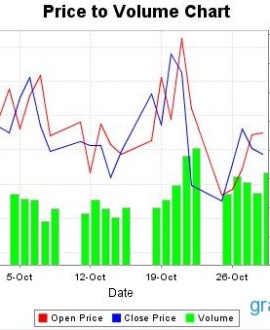
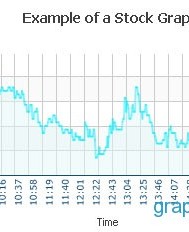
Stock graphs or charts are basically time series plots where the vertical axis represents price scale while the horizontal axis represents the time scale. Prices are plotted along the x-axis from left to right. Charts like these are used by analysts to forecast future price trends based on past price movements. However, these are not absolute predictions. But, like weather forecasting, analysts can help investors or traders to anticipate what is most likely to happen over time, based on data of previous time periods.
Data in a stock graph is usually compressed to show data within a certain timeframe, whether daily, weekly, or monthly. Different kinds of people focus on different timeframes on the chart. Traders concentrate on daily trends, paying more attention to short-term price movements. Investors, on the other hand, focus on weekly or monthly periods of activity to spot long-term trends. Long-term charts give a big picture of price activity over a longer range of time, while daily or intradaily charts focus on the day-to-day movements.
There are different kinds of graphs that can be used: line graphs, bar graphs, candlestick charts, and point & figure charts. None of these, however, are considered better than the rest and each server a specific purpose or is used to focus on a certain aspect of the same data. It doesn’t matter which graph an analyst chooses and is usually just a matter of personal preference. After all, it’s the same data that is being presented, only in a different view. At the end of the day, it is the actual analysis of the data that is important to an analyst’s success.
Stock Graphs
Stock graphs are used to display information about stocks. They help in showing daily stock prices or can be used to show statistical data over a period of time.
Stock graphs are generally always seen on a two-axis system. They are always plotted against time, where “time” is on the X-axis and usually the Y-axis is used for currency value.
One can use a stock graph to either show the stock prices of one company over a period of time or to compare multiple stock prices on a single day.
These graphs are used almost exclusively for displaying financial data and are generally tailor-made for investors and traders.
There are five data attributes which are specific to stock graphs, they are: Open, High, Low, Close and Volume.
Stock graphs require 2 or as many as 5 values per marker which again depends on the stock graph one uses.
There are 3 sub-types of stock graph:
High-Low/Open-Close
High-Low (This sub-type does not include Open/Close values)
And Candle Stick
The only limitation of stock graphs is that they are used exclusively for a specific purpose.
Tags
AH5N1 avian chart avian graph calorie graphs crime graphs currency chart currency graph energy demand graph energy graph energy graphs facebook chart fertilizer graphs funny pie chart graph of renewable energy growing world Population Histograms How to Create Graphs how to make a coffee graph humain avian influenza inforgraphics Interactive Graph interactive graphing java graph man argument chart Math Graphs Most used subways national debt News Graphs pacman pictographs pizza graph popular charts popular graphs Stock Graph subway chart subway graph tax graphs threats chart threats graph Transportation Graphs Treasury Securities GRAPH us national debt water graphs wii sales wii sales chart